Soft Washing Older Homes: A Safer Exterior Cleaning Method
Aged wood, original mortar and pre-1978 paint do not tolerate high-pressure water. On an older Falls Church home, the method matters more than the machine.
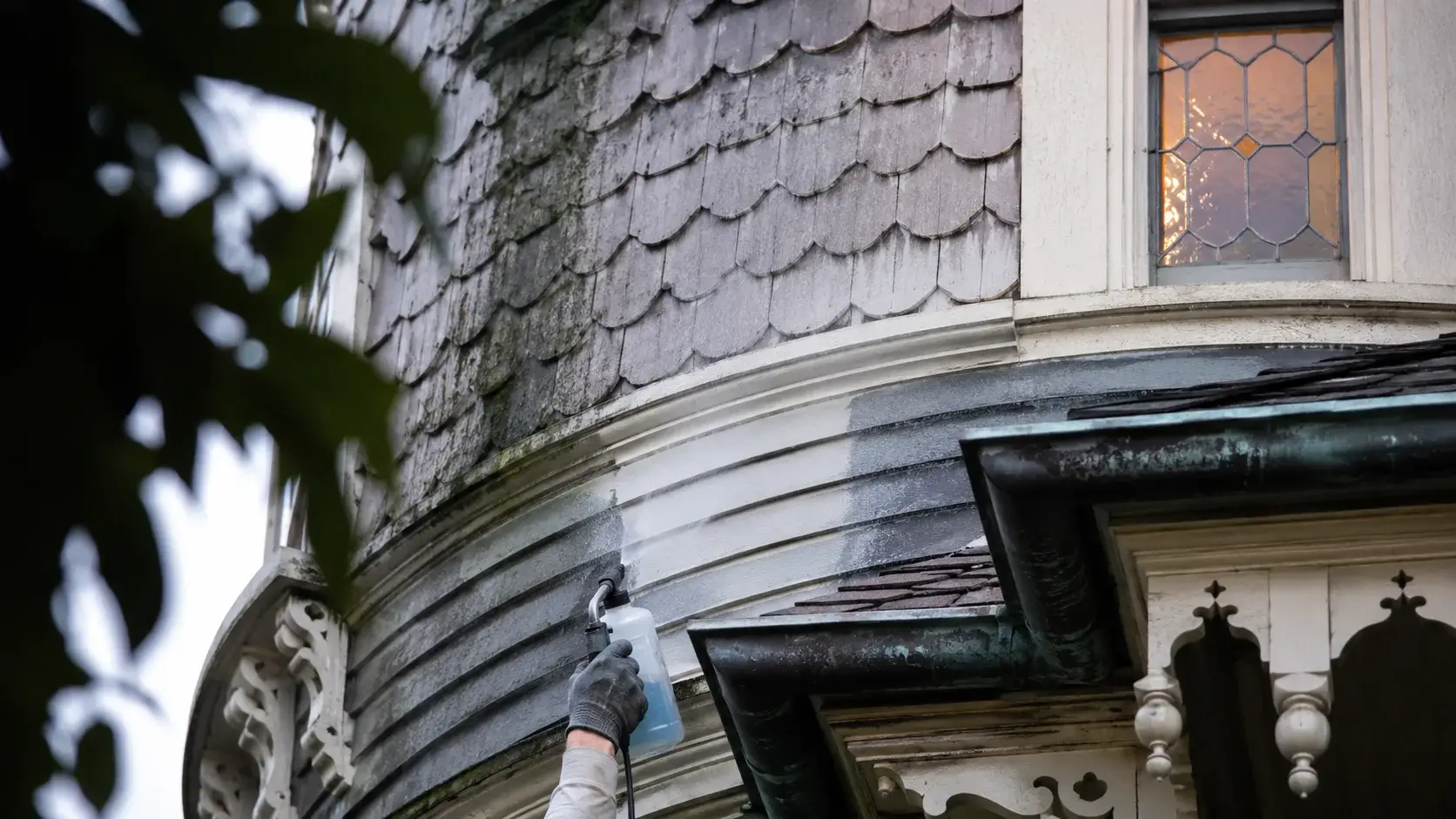
Gentle soft washing protects the ornate cedar shingles and original trim of an older home.
If you own an older home in Falls Church, the exterior was likely built with materials that do not tolerate high-pressure water. Aged wood, original mortar, older painted surfaces, and decades-old siding can be cleaned safely, but the method matters more than the machine. Soft washing uses low pressure and a cleaning solution to remove algae, mildew, and organic buildup without forcing water into surfaces that have softened with age.
High pressure on an older exterior can strip paint, gouge wood, blow out crumbling mortar, and drive water behind siding. A routine cleaning should never cause damage like that. On an older home, soft washing is usually the safer starting point.
Key Takeaways
- Soft washing cleans with a solution and low pressure, so it treats algae and mildew without relying on water force that can harm aged materials.
- Older siding, wood, and masonry are more likely to be brittle, previously repaired, or weathered, which raises the risk of pressure damage.
- Homes built before 1978 may have lead-based paint. The EPA warns that disturbing old paint can create a hazard, so failing or flaking paint calls for a careful approach.
- Condition matters as much as material. Soft mortar, loose caulk, and lifting paint all point toward a gentler method.
- Most older homes need more than one method: soft washing the house and pressure or power washing durable hardscape like concrete.
Not sure your older home can take pressure?
Wilson’s inspects the surface first and matches the method to the material. Select your services and see current prices in the residential builder.
What Is Soft Washing, and Why Does It Suit Older Homes?
Soft washing combines low-pressure application with a cleaning solution chosen for the surface and the type of buildup. Instead of blasting growth away with force, the solution does most of the work and the surface is rinsed gently. That approach fits older homes because it cleans without stressing materials that have weathered for decades.
Pressure washing and power washing rely mainly on water force, and power washing adds heat. Both have a place on durable hardscape. On an aging house, though, the same force that clears a concrete driveway can lift paint, splinter wood, or push water past tired caulk and failing seals. Wilson’s uses soft washing on siding, wood, and painted surfaces, and evaluates hard surfaces separately to decide whether pressure washing or heated power washing is appropriate.
Which Older-Home Surfaces Need Soft Washing?
There is no single setting that belongs on an entire property, and that is doubly true for an older home. A contractor should assess the material, age, finish, joints, and existing damage before cleaning begins. When pressure tolerance is uncertain, start low. You can add cleaning force after a surface is assessed. You cannot undo pressure damage after it happens.
Scroll the table sideways on a phone →
| Older-Home Surface | Preferred Starting Method | Why It Matters on an Older Home |
|---|---|---|
| Aged or original wood siding | Soft wash | Weathered wood raises grain, splinters, and loses coatings under high pressure. |
| Older painted surfaces | Soft wash after inspection | Pre-1978 homes may have lead-based paint, and high pressure can chip or spread it. |
| Vinyl or fiber cement siding | Soft wash / low pressure | Low pressure reduces the risk of forcing water behind panels. Follow manufacturer guidance. |
| Brick with older mortar | Assess before any pressure | Brick may be sound while soft or deteriorated mortar joints wash out under force. |
| Asphalt shingle roof | Low-pressure chemical cleaning | High pressure can loosen protective granules and damage shingles. |
| Wood decks, porches, and railings | Low-pressure, material-appropriate | Older, dried-out wood gouges and strips finish quickly under high pressure. |
| Concrete walks and driveways | Pressure or power wash | Sound concrete usually tolerates the stronger cleaning that ground-in dirt needs. |
What Are the Risks of High Pressure on an Older Home?
High-pressure washing is useful when a surface can tolerate it. Problems begin when the same approach meets aged wood, original masonry, old paint, or a weathered roof.
Old paint
Homes built before 1978 may have lead-based paint. The EPA’s Renovation, Repair, and Painting rule exists because disturbing old paint can create a health hazard, and its exterior work practices apply once a job disturbs more than 20 square feet of paint. Blasting flaking paint off an old exterior is exactly the kind of disturbance to avoid. A low-pressure wash that removes surface growth without stripping intact paint is the safer path.
Aged wood
Excessive pressure raises grain, splinters fibers, gouges the surface, and removes coatings. On dried-out, decades-old wood the damage happens fast. The right method depends on the species, finish, age, and condition.
Older mortar and masonry
Brick can be durable while its mortar is not. Older, deteriorated, or previously repaired joints can wash out under high pressure, opening a path for water. Masonry on an older home should be inspected before any pressure is used.
Asphalt shingle roofs
The Asphalt Roofing Manufacturers Association says not to use a power washer on asphalt roofing because high pressure is likely to damage the roof. It recommends gently applying the right cleaning solution and following the shingle manufacturer’s instructions.
Fiber cement siding
If an older home was re-sided, treat the siding by its rules. James Hardie’s care guidance says a pressure washer can damage the surface of its siding and recommends low-pressure water for routine cleaning.
The goal is not to avoid pressure entirely. It is to keep it off the parts of an older home that cannot take it.
Worried about paint, mortar, or old wood?
Tell Wilson’s which surfaces need cleaning so the crew can match the method to each one.
How Do Soft-Washing Solutions Work, and What About Landscaping?
Soft washing pairs low-pressure application with a cleaning solution that treats organic growth. Sodium hypochlorite is common in exterior and roof solutions, often with surfactants that help the mix wet and cling to a surface long enough to work. The formula should be adjusted to the material and level of buildup, not treated as one universal recipe. On an older home, that adjustment is what keeps a cleaning gentle enough for aged surfaces.
Landscaping protection matters because even an effective solution can harm plants when it is mixed, applied, or allowed to run off improperly. Wilson’s published process includes pre-rinsing nearby plants and beds with fresh water, then rinsing surrounding landscaping during and after the work. Older properties often have mature, established plantings that are worth protecting, so ask any contractor how they manage runoff, overspray, and plant protection.
Why Does Falls Church’s Setting Affect Exterior Cleaning?
Falls Church has warm, humid summers and regular rain, plus mature tree cover and shade across many older neighborhoods. Surfaces that dry slowly, such as shaded and north-facing walls, tend to grow algae sooner than walls and hardscape that get more sun and airflow. That is why two homes on the same block can need different care.
The practical point is simple: the local climate does not justify more pressure. It makes choosing the right method, and paying attention to a home’s actual exposure, more important. On an older home, matching the method to each surface is the difference between a clean exterior and an expensive repair.
How Often Should an Older Home Be Cleaned?
There is no responsible one-size-fits-all schedule. Sun exposure, tree cover, drainage, surface material, and how fast growth returns all matter. Checking the exterior each year is a practical baseline for many Falls Church homes, but not every surface needs the same service on the same interval. Hardscape cleaning and sealing run on their own cycles, an older wood surface may need attention sooner than the siding around it, and gutter cleaning follows the leaf drop rather than the calendar.
What Should You Look for in a Contractor for an Older Home?
A qualified contractor should explain why a method belongs on each surface, rather than treating the whole property with one pressure setting. Before hiring, confirm that the contractor:
- Carries appropriate insurance and can provide proof of coverage.
- Inspects the condition and material of surfaces before choosing a method.
- Recognizes the added care an older home needs for paint, mortar, and aged wood.
- Has a clear process for protecting landscaping, fixtures, openings, and adjacent surfaces.
- Follows roofing and siding manufacturer guidance where it applies.
- Has verifiable local reviews or relevant project experience.
A proposal to pressure wash an asphalt shingle roof or to blast flaking paint off old siding is a warning sign. Both invite the kind of damage a cleaning should prevent.
Is DIY Pressure Washing a Good Idea on an Older Home?
DIY cleaning can be reasonable for accessible, durable hardscape when you understand the equipment and confirm the surface can tolerate it. The risk rises quickly on older siding, weathered masonry, aged wood, roofs, and upper-story surfaces. Work at height adds fall hazards, and soft-wash chemicals require careful mixing, application, runoff control, and plant protection. For siding, roof cleaning, painted surfaces, and other pressure-sensitive materials, use a method designed for the material instead of assuming more pressure cleans better.
Soft Washing or Pressure Washing for Your Older Home?
For most older Falls Church homes, the answer is not one or the other. Soft washing is the better fit for the house itself, while pressure or power washing belongs on durable hardscape such as concrete walks and driveways.
Wilson’s crews choose the method surface by surface. On a home with original wood, older paint, aging mortar, and a weathered roof, that is the safest way to get a clean result without creating a repair. If your older home has visible algae, mildew, pollen buildup, dark roof streaks, or stained hardscape, start with an assessment of the surface instead of choosing a machine by pressure rating.
Build Your Falls Church Exterior-Cleaning Package
Select the services your older home needs, see current prices, and choose an available service date in Wilson’s residential builder.
Current policy: The main site states a $500 minimum for residential exterior projects. Verify the live builder before relying on any displayed price.
What Northern Virginia Customers Say About Wilson’s
These Google reviews are currently published by Wilson’s and describe results for commercial centers, an HOA community, and an IPE wood deck.
“Used them to wash 4 commercial center’s roofs, sidewalks, and awnings. Professional service, diligent work, and easy to setup. Highly recommend!”
“The difference before and after the project is night and day. Our walkways, steps, retaining walls, and common areas look cleaner than they have in years… They were professional, courteous, and respectful of both residents and the landscaping throughout the project… I can honestly say the results exceeded my expectations.”
“Great job transforming a gray and faded IPE wood deck into almost like new condition. Easy to work with and reasonably priced! Highly recommend.”
Frequently Asked Questions
Is soft washing safe for an older home?
Can you power wash an older home with wood siding?
Does old lead paint make washing dangerous?
Will soft washing damage old brick and mortar?
How often should I clean the exterior of an older home?
Related Services in Falls Church
Soft Washing
Low pressure and gentle soap for siding, stucco, and painted wood.
Roof Cleaning
Low-pressure treatment for algae streaks that protects shingle granules.
Pressure Washing
Cold-water cleaning for concrete walks, brick steps, and stone.
Power Washing
Heated water for oil, grease, and ground-in dirt on driveways.
Hardscape Cleaning & Sealing
Wash and seal stone patios and brick paths on their own cycle.
Gutter Cleaning
Hand-clearing and downspout flushing so water drains away from the house.