How Often Should Falls Church Homes Be Power Washed?
Inspect once a year, plan a full house wash every 12 to 24 months, then let the home move that date. A shaded wall with returning green may need attention sooner.
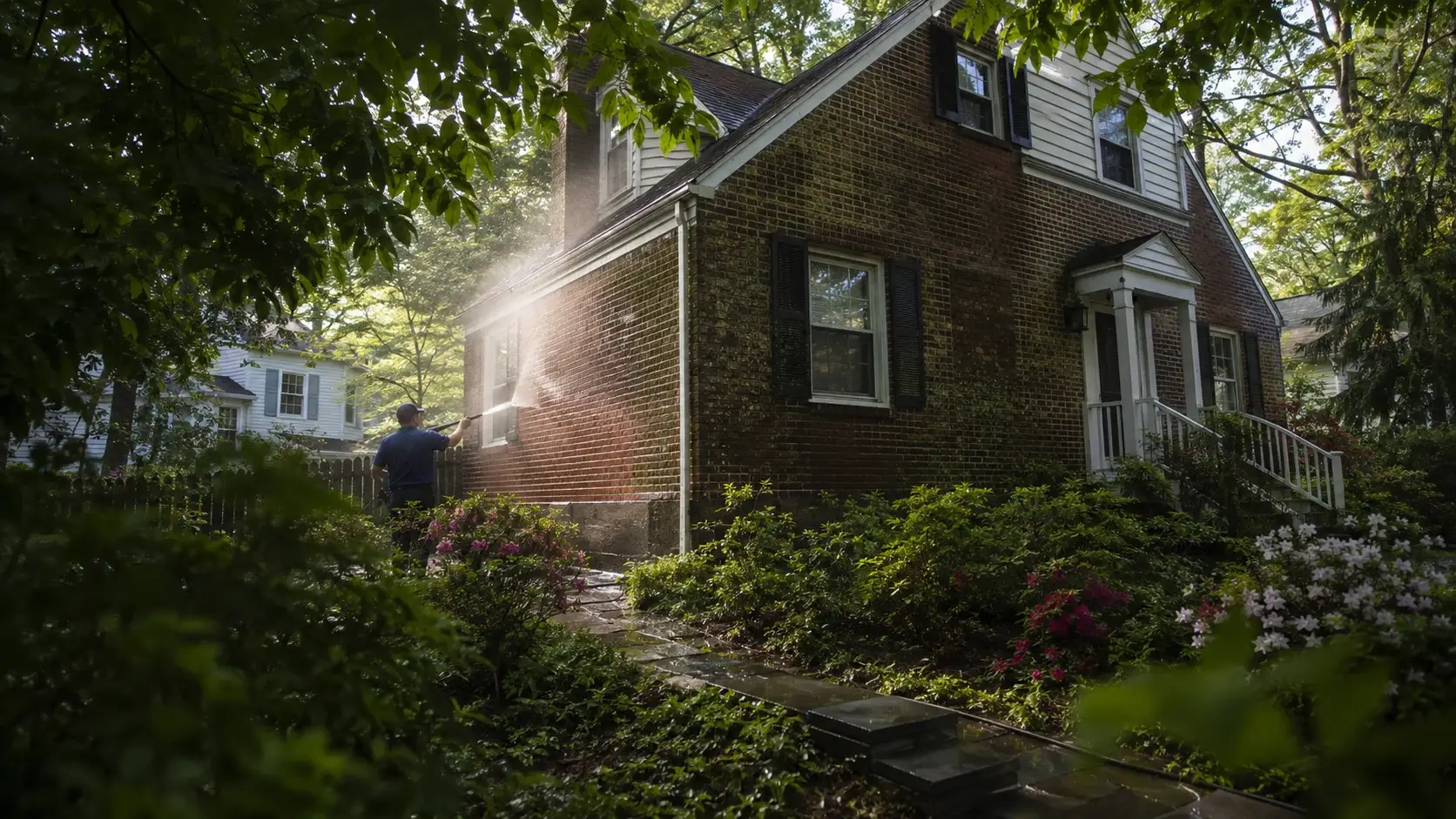
Algae-stained brick on a mature Falls Church home — the material and its condition set the method, not the machine.
Most Falls Church homeowners should inspect their siding and trim once a year and plan a full house wash about every 12 to 24 months. That is a practical starting range, not a rule.
A shaded wall with returning green or dark buildup may need attention sooner. A clean exterior with more sun and airflow may go longer.
What many people call power washing is not necessarily high-pressure cleaning. Siding on an established home may need a low-pressure house wash, while sound concrete can call for a different method. The surface, finish, condition, and buildup should determine how the work is done.
Key Takeaways
- Inspect the exterior at least once a year.
- Use 12 to 24 months as a planning range, then adjust it to the home.
- Check shaded walls and areas beneath overhangs more often.
- Identify the siding or masonry before choosing a cleaning method.
- Repair loose materials or failing finishes before aggressive cleaning.
Seeing buildup on shaded siding?
Review Wilson’s current house-washing options before choosing the next cleaning date.
How Often Should Different Falls Church Homes Be Washed?
Start with the home’s actual exposure instead of assigning every property the same date. The table below is a planning guide. Manufacturer care instructions and the condition of the exterior still take priority.
Scroll the table sideways on a phone →
| Exterior Condition | Practical Starting Schedule | What to Check |
|---|---|---|
| Mostly sunny with little visible buildup | Inspect yearly A full wash may fall near the 18 to 24 month end of the range. | Keep watching the sides that receive less sun. |
| Mixed sun and shade with regular dirt or pollen film | Inspect yearly Start near 12 to 18 months. | Adjust the next date based on how quickly buildup returns. |
| Heavy shade or recurring green or dark film | Inspect spring and fall Cleaning may be needed about once a year. | Focus on the exposure causing the earlier return. |
| Loose siding, failing paint, open joints, or deteriorated mortar | Inspect before any washing | Address condition and method before setting a cleaning date. |
Which Cleaning Method Fits Each Exterior Material?
The home’s age matters less than the material and its present condition. An established home may combine vinyl, brick, painted trim, fiber cement, wood, and newer replacement materials. Each surface needs its own starting method.
| Surface | Cautious Starting Method | Reason |
|---|---|---|
| Vinyl siding | Follow the manufacturer Use the product’s own cleaning instructions. | Vinyl manufacturers publish different limits for pressure, direction, and cleaning frequency. |
| Fiber cement siding | Low-pressure water With material-appropriate tools. | James Hardie warns that pressure washing can damage the surface of its siding. |
| Brick and masonry | Inspect first Check brick, mortar, and existing stains before selecting pressure or cleaner. | Durable brick can still be paired with worn mortar or a finish that needs more care. |
| Painted wood and stucco | Low-pressure cleaning After checking the coating and substrate. | Peeling paint, cracks, chalking, and loose areas may need repair before washing. |
CertainTeed’s vinyl siding guidance recommends annual cleaning and warns against prolonged or high-pressure rinsing. Georgia-Pacific publishes different instructions for its vinyl siding, including specific limits when a power washer is used. That difference is why the product should be identified when possible.
For fiber cement, James Hardie advises using low-pressure water and a soft brush. For brick, Acme Brick warns that some high-pressure equipment can change the appearance of brick.
What Can Go Wrong When the Method Does Not Fit the Surface?
Using one pressure setting across the entire property can force water behind siding, disturb weak mortar, damage a coating, or leave an uneven finish. Existing defects also matter. Loose panels, open joints, failing paint, cracked stucco, and deteriorated mortar should be identified before cleaning begins.
Washing cannot repair faded color, oxidation, failing paint, rust, or mineral deposits. Correctly identifying the condition prevents repeated cleaning when the surface needs a different treatment or repair.
Not sure whether the mark is dirt, growth, or a failing finish?
Wilson’s can help match the cleaning plan to the material and its condition.
What Northern Virginia Customers Say About Wilson’s
These Google reviews are currently published by Wilson’s and describe results for commercial centers, an HOA community, and an IPE wood deck.
“Used them to wash 4 commercial center’s roofs, sidewalks, and awnings. Professional service, diligent work, and easy to setup. Highly recommend!”
“The difference before and after the project is night and day. Our walkways, steps, retaining walls, and common areas look cleaner than they have in years… They were professional, courteous, and respectful of both residents and the landscaping throughout the project… I can honestly say the results exceeded my expectations.”
“Great job transforming a gray and faded IPE wood deck into almost like new condition. Easy to work with and reasonably priced! Highly recommend.”
Why Can Tree Exposure Change the Cleaning Schedule in Falls Church?
The City of Falls Church describes its urban forest as a valued local resource and actively manages public trees. That does not mean every Falls Church property has the same exposure. It does make tree cover a useful factor when evaluating an established home.
A house beneath mature trees may have one wall that receives less sun and dries more slowly after rain. That wall can show buildup before the front or south-facing side. Check beneath eaves, behind dense landscaping, near downspouts, and along elevations that receive less direct sun.
What Signs Mean the House Should Be Washed Now?
Do not wait for a calendar anniversary when the exterior already shows widespread buildup. Schedule an assessment when you notice:
- Green, gray, or dark film spreading across siding.
- Uneven dirt beneath eaves or around runoff paths.
- Pollen or surface grime that remains after the main pollen season.
- Buildup returning first on a shaded or north-facing wall.
- A need for a clean surface before painting, staining, or another exterior project.
If only one small area is affected, identify why that spot is different before putting the entire property on a shorter schedule.
What Should You Ask Before Hiring a House-Washing Company?
A contractor should be able to explain how the material and its condition affect the cleaning plan. Ask:
- What material is on each part of the exterior?
- Which areas will receive low-pressure cleaning?
- How will existing paint, siding, or mortar problems be handled?
- Do the manufacturer’s instructions limit the cleaning method?
- Which conditions would require repair before washing?
A clear surface-by-surface answer is more useful than a promise to use one machine setting on the entire property.
How Should You Set the Next House-Washing Date?
Start with a yearly exterior inspection and a 12 to 24 month planning range. Shorten that range when shaded areas develop recurring buildup. Extend it when the exterior remains clean and the manufacturer’s care guidance allows it.
The schedule should change when siding is replaced, a home is repainted, landscaping changes the amount of shade, or repairs reveal a different material or finish.
Review Falls Church House-Washing Options
Is widespread buildup returning on your home?
Let the exterior’s materials, exposure, and condition guide the next cleaning plan.
Current policy: the main site states a $500 minimum for residential exterior projects. Verify the live builder before relying on any displayed price.
Frequently Asked Questions
Should a Falls Church home be power washed every year?
Is power washing safe for an older home?
Should every side of the house be cleaned on the same schedule?
Related Services in Falls Church
Soft Washing
Low pressure and gentle soap for siding, stucco, and painted wood.
Pressure Washing
Cold-water cleaning for concrete walks, brick steps, and stone.
Roof Cleaning
Low-pressure treatment for algae streaks that protects shingle granules.
Gutter Cleaning
Hand-clearing and downspout flushing so water drains away from the house.
Hardscape Cleaning & Sealing
Wash and seal stone patios and brick paths on their own cycle.
Window Cleaning
Streak-free exterior glass that brightens the whole front elevation.